 Could you lose a ton of weight this year? Literally, one ton: 2,000 pounds.
This is not about body weight, of course, but belongings. This year, could you sell, donate, and discard 2,000 pounds of stuff?
Automobiles don’t count. Nor does a set of weights since a collection of dumbbells, barbells, and weight plates usually run 300 to 500 pounds. (Plus, there’s nothing easier to sell used online than weights.) Major appliances don’t count either since they’re usually replaced with a newer model.
But everything else goes toward the 2,000-pound mark. Furniture (both indoor and outdoor), tools, small kitchen appliances, toys, sporting goods, knick-knacks, canned food, blankets, old media (CDs, DVDs, tapes), and clothing counts. So do books and magazines – that’s at least 200 pounds for most households – along with excess school/office supplies, and paper of all sorts that can be scanned (if necessary) and/or shredded.
Keep a running total with each trip to the donation center, recycling bin, or landfill. Use a scale for easy-to-weigh items like books but otherwise make realistic estimates of weight. Losing a ton means dropping 167 pounds of stuff a month or between 5 and 6 pounds a day.
Here’s the catch. You also must add the amount of weight brought into the home. Trips to the grocery store do not count. Nor do home repair/maintenance items. But everything else must be added. New clothes, household decor, additional TVs, books, and paper. Think back to Christmas. How many pounds of stuff came into the house?
Possessions weigh us down and it doesn’t occur overnight. It happens daily when we bring in 5 or 10 pounds of stuff but don’t get rid of anything. Much like making an effort to lose body weight, when we become mindful of everything placed in the body, it’s necessary to keep a log of the in-flow of stuff to lose a ton of weight and make significant changes.
How much weight can you lose? I’ve thought of this recently after cleaning out a one-bedroom condo after a family member died. He was not a pack rat or hoarder, just someone with all of the typical things a household needs. In such a situation, it’s hard to find a home for an iron and ironing board, toaster, microwave, coffee maker, dishes, flatware, brooms and mops, coolers, framed wall art, and furniture of all sorts. Most of it went to donation centers. For bigger items, I found people online to take them away.
Could he have dropped a ton of weight? Probably not, though he did have a few minor collections. Like some seniors, he did not have much of his life digitized, so there were a couple of hundred pounds of paper, files, magazines, and books.
This is not about making things easier for your loved ones when you pass, though that’s a noble byproduct of this exercise. Instead, think in terms of how much lighter you’ll feel after dropping a ton of weight. Much like losing 10 or 20 pounds of fat, eliminating 2,000 pounds of household excess will be a life-changing accomplishment.
 The toughest part of decluttering or living lean for some people is unloading a collection. It’s both time consuming and emotionally challenging.
 There’s a flashback in the movie “The Shawshank Redemption” showing how Andy Dufresne tunneled his way out of a prison cell with a tiny rock hammer at night, covering the growing hole with a poster of Rita Hayworth and later Raquel Welch.
 It’s not just the initial cost of the home in 1999, which was significant, but also the ongoing expense in terms of taxes and insurance, to say nothing of the time maintaining the home and a huge yard. In recent years, it seems we’ve welcomed more contractors and repairmen into the home than guests and family members.
 ENTERTAINMENT: Like many people, I’ve stopped purchasing books, CDs, and DVDs because of digital accessibility. I prefer reading physical books, but read only what’s accessible through the library, which is most everything if you’re willing to wait, at most, a few weeks. Each trip to the library I bring a bag of books I no longer need to donate toward the library’s monthly book sale.
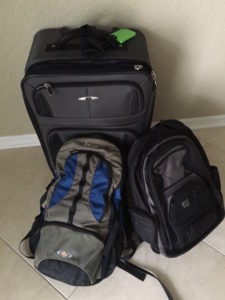 We didn’t evacuate for Hurricane Irma. But we had our bags packed and staged in one area of the house for either a last-minute departure or so we’d have a better chance of finding our most important belongings together amid the rubble.
 Not long after we moved to Florida in the late ’90s, we had three hours to evacuate for a hurricane. This was before kids and digital media, so we dedicated much car space to photo albums and CD and DVD collections, which seems downright silly now.
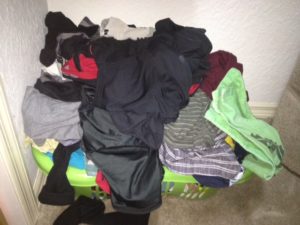 This isn’t about wearing dirty clothes, saving water and energy, or going nudist for a few weeks, though there’s something to be said for all of that. This is about leaning out your wardrobe and discovering the clothes you truly value.
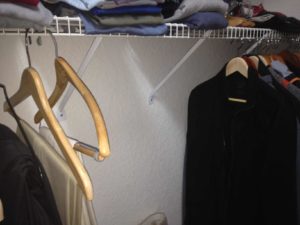 As I made my way to the bottom of that T-shirt pile looking for something to wear, I passed a few other shirts, well-worn wardrobe veterans. It was time to thank them for their service, as Marie Kondo recommends in her terrific book The Life-Changing Magic of Tidying Up, and take them either to Goodwill or the rag bin.
 As I write this, Hurricane Matthew is gaining strength in the Caribbean. Those of us who live in Florida know this drill well. We keep an eye on the news and update our hurricane plan if needed. Thankfully the storm usually weakens, moves offshore or takes a turn away from us.
 Forrest Gump knew how to live lean. The guy didn’t own a car, preferring to run everywhere, and kept himself in top condition. He had a laser focus in all of his endeavors, from football to the military to Ping-Pong to entrepreneurial endeavors. Even after becoming a multimillionaire, he lived in his childhood home, wore the same clothes, and had the same small circle of friends, mostly just Jenny and Lt. Dan.
 That’s not to say, however, that we shouldn’t think like curators. The greatest museums display only a fraction of their vast holdings, the most noteworthy pieces. Sometimes artifacts are rotated in seasonally, but for the most part a museum’s holdings are warehoused and stored for research and preservation.
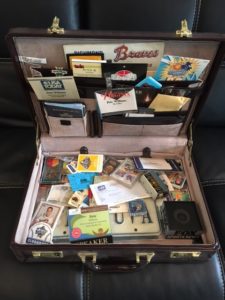
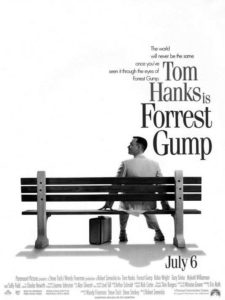 I could have gone with a suitcase or a steamer trunk but that would not be living lean. Choosing a small suitcase – or briefcase – forces you to keep only what you’ll carry on the journey and nothing more. If you add to it, you must take something out. That’s why it’s best to be constantly curating.